Setting up Multiple MacBooks with Managed Apple IDs or MDM: A Complete Guide for Small Business Success
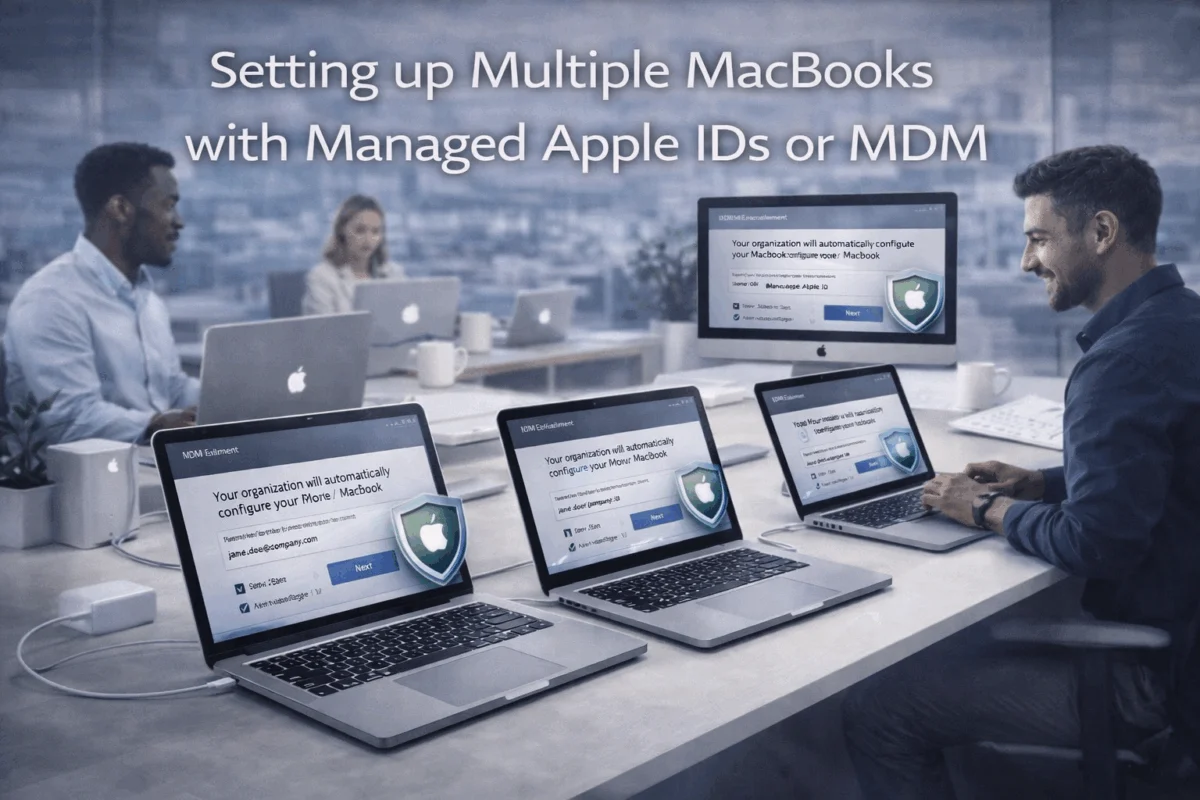
Managing a fleet of MacBooks can feel overwhelming when you’re running a creative agency or small business. One day, you’re focused on client deliverables, and the next, you’re troubleshooting why the new designer can’t access shared files or why security settings vary wildly across your team’s devices. Setting up multiple MacBooks with managed Apple IDs or MDM transforms this chaos into a streamlined, secure system that actually supports your business goals rather than hindering them.
Key Takeaways
• Managed Apple IDs provide centralized control over user accounts, app purchases, and data access across your MacBook fleet
• Mobile Device Management (MDM) solutions automate device configuration, security policies, and software deployment
• Proper planning prevents common pitfalls like mixed personal/business accounts and inconsistent security settings
• Documentation and standardized processes reduce support tickets and enable faster employee onboarding
• Small businesses can implement enterprise-level security without hiring dedicated IT staff
Understanding the Foundation: Managed Apple IDs vs. Personal Apple IDs

When setting up multiple MacBooks with managed Apple IDs or MDM, the first critical decision involves choosing between managed and personal Apple IDs. This choice impacts everything from app licensing to data security and long-term device management.
What Makes Managed Apple IDs Different
Managed Apple IDs function as business-controlled accounts that your organization owns and administers. Unlike personal Apple IDs tied to individual email addresses, managed Apple IDs use your company’s domain and remain under organizational control even when employees leave.
Key advantages of managed Apple IDs include:
• Centralized account management through Apple Business Manager
• Bulk app purchasing and distribution with volume licensing
• Enhanced security controls, including mandatory two-factor authentication
• Data separation between personal and business content
• Simplified offboarding when employees transition out
The Hidden Costs of Personal Apple IDs in Business
Many small businesses start by having employees use personal Apple IDs on company MacBooks. While this seems convenient initially, it creates significant challenges as the business grows. Personal Apple IDs make it difficult to maintain consistent security policies, complicate app licensing, and create data ownership issues when employees leave.
Consider this scenario: A graphic designer purchases Adobe Creative Suite using their personal Apple ID on a company MacBook. When they leave, the license goes with them, and recovering business files stored in their personal iCloud becomes complicated. Enhanced security controls become nearly impossible to enforce consistently across mixed account types.
Choosing the Right MDM Solution for Your Business Size
Setting up multiple MacBooks with managed Apple IDs or MDM requires selecting an MDM platform that matches your business complexity and technical expertise. The market offers solutions ranging from simple cloud-based platforms to comprehensive enterprise systems.
Cloud-Based MDM: Simplicity for Small Teams
For creative agencies and small businesses managing 5-50 MacBooks, cloud-based MDM solutions provide the sweet spot between functionality and simplicity. These platforms typically offer:
• Quick deployment with minimal technical setup
• Intuitive web interfaces for non-technical administrators
• Automated compliance monitoring and reporting
• Scalable pricing that grows with your team
Popular options include Jamf Now, Microsoft Intune, and Kandji. Each platform offers different strengths—Jamf Now excels in Apple ecosystem integration, while Microsoft Intune provides excellent cross-platform support for mixed environments.
On-Premises vs. Cloud Considerations
The choice between cloud-based and on-premises MDM depends on your specific requirements around data sovereignty, internet connectivity, and internal IT capabilities. Cloud solutions offer faster implementation and automatic updates, while on-premises deployments provide greater control over sensitive data.
Cloud MDM works best when:
- Your team works remotely or across multiple locations
- You prefer predictable monthly costs over capital expenditures
- Automatic security updates and feature additions appeal to your workflow
- Your internet connectivity remains reliable
On-premises MDM makes sense when:
- Regulatory requirements mandate local data storage
- You have dedicated IT staff to manage the infrastructure
- Your network environment includes air-gapped systems
- Long-term cost control takes priority over convenience
Step-by-Step Implementation: From Planning to Deployment
Successfully setting up multiple MacBooks with managed Apple IDs or MDM requires methodical planning and execution. This process involves several interconnected phases that build on one another.
Phase 1: Apple Business Manager Setup
Apple Business Manager serves as the foundation for the creation of managed Apple IDs and device enrollment. Setting up this platform correctly prevents numerous downstream complications.
Essential setup steps include:
- Verify domain ownership through DNS records or file upload
- Configure organizational structure with appropriate admin roles
- Establish device enrollment programs for new and existing MacBooks
- Set up volume purchasing for apps and books
- Create initial managed Apple ID templates with consistent naming conventions
The domain verification process typically takes 24-48 hours, so plan accordingly when scheduling your deployment timeline.
Phase 2: MDM Platform Configuration
Once Apple Business Manager is operational, configure your chosen MDM platform to integrate seamlessly with your Apple ecosystem. This phase involves creating the policies and profiles that will govern your MacBook fleet.
Critical configuration elements:
• Security policies including FileVault encryption, firewall settings, and password requirements
• Application deployment rules for both Mac App Store and third-party software
• Network configurations for Wi-Fi, VPN, and certificate management
• User experience customization, including dock layouts and desktop backgrounds
• Compliance monitoring with automated reporting and remediation
Implementing strong security policies from the start prevents the need for disruptive changes later as your business grows.
Phase 3: Device Enrollment and User Onboarding
The enrollment process transforms new MacBooks from generic hardware into business-ready workstations. Modern MDM solutions support zero-touch deployment, where devices automatically configure themselves when connected to the internet.
Streamlined enrollment workflow:
- Unbox the new MacBook and power it on
- Connect to the internet during initial setup
- Automatic MDM enrollment begins based on the serial number
- User authentication with managed Apple ID credentials
- Policy application, including security settings and app installation
- User training on new workflows and security requirements
This process typically completes in 30-45 minutes, significantly faster than manual configuration.
Common Implementation Challenges and Solutions
Even well-planned setups of multiple MacBooks with managed Apple IDs or MDM projects encounter predictable obstacles. Understanding these challenges in advance enables proactive solutions rather than reactive troubleshooting.
Challenge 1: User Resistance and Change Management
Employees often resist new security requirements or workflow changes, especially when transitioning from personal to managed Apple IDs. This resistance can undermine the entire implementation if not addressed thoughtfully.
Effective change management strategies:
• Communicate benefits clearly, focusing on improved productivity and security
• Provide comprehensive training before and after deployment
• Offer ongoing support through multiple channels
• Gather feedback and adjust policies based on real-world usage
• Celebrate quick wins to build momentum and buy-in
Challenge 2: Legacy Device Integration
Existing MacBooks that employees have been using with personal Apple IDs require special handling during the transition to managed systems. Simply wiping these devices often isn’t practical due to ongoing projects and personal data.
Migration strategies for existing devices:
- Inventory current configurations and identify critical applications
- Back up user data to approved business storage systems
- Schedule migration windows during low-impact periods
- Provide temporary devices if needed during transition
- Verify successful migration before decommissioning old setups
Challenge 3: App Licensing and Deployment Complexity
Managing software licenses across multiple MacBooks can quickly become complex, especially when dealing with subscription-based creative software and specialized business applications.
Licensing best practices:
• Centralize purchases through volume licensing programs when available
• Document license assignments and track usage across devices
• Automate deployment through MDM rather than manual installation
• Plan for license transfers when employees change roles or leave
• Regular audits to ensure compliance and optimize costs
Understanding app deployment strategies helps prevent licensing violations and reduces software costs over time.
Building Documentation and Training Systems
Sustainable setting up multiple MacBooks with managed Apple IDs or MDM requires comprehensive documentation and training systems. These resources enable consistent support and smooth scaling as your business grows.
Creating Effective User Documentation
User-facing documentation should focus on daily workflows rather than technical implementation details. Employees need clear guidance on everyday tasks such as connecting to Wi-Fi, accessing shared files, and troubleshooting basic issues.
Essential documentation topics:
• Initial setup walkthrough with screenshots and step-by-step instructions
• Daily workflow guides for everyday business tasks
• Troubleshooting quick reference for frequent issues
• Security best practices tailored to your business requirements
• Contact information for additional support when needed
Administrative Runbooks
Technical documentation enables consistent administration and reduces dependency on individual knowledge. These runbooks prove invaluable during staff transitions or when scaling operations.
Critical administrative documentation:
- Device provisioning procedures from unboxing to user handoff
- User account management, including creation, modification, and deletion
- Policy update workflows with testing and rollback procedures
- Incident response plans for security events and system failures
- Vendor contact information and escalation procedures
Training Program Development
Effective training programs address both initial onboarding and ongoing skill development. Consider different learning styles and technical comfort levels when designing training materials.
Multi-modal training approach:
• Live demonstration sessions for visual learners
• Written step-by-step guides for reference during actual work
• Video tutorials for complex procedures
• Hands-on practice sessions with supervised guidance
• Regular refresher training as systems evolve
Measuring Success: Productivity Gains and Support Reduction
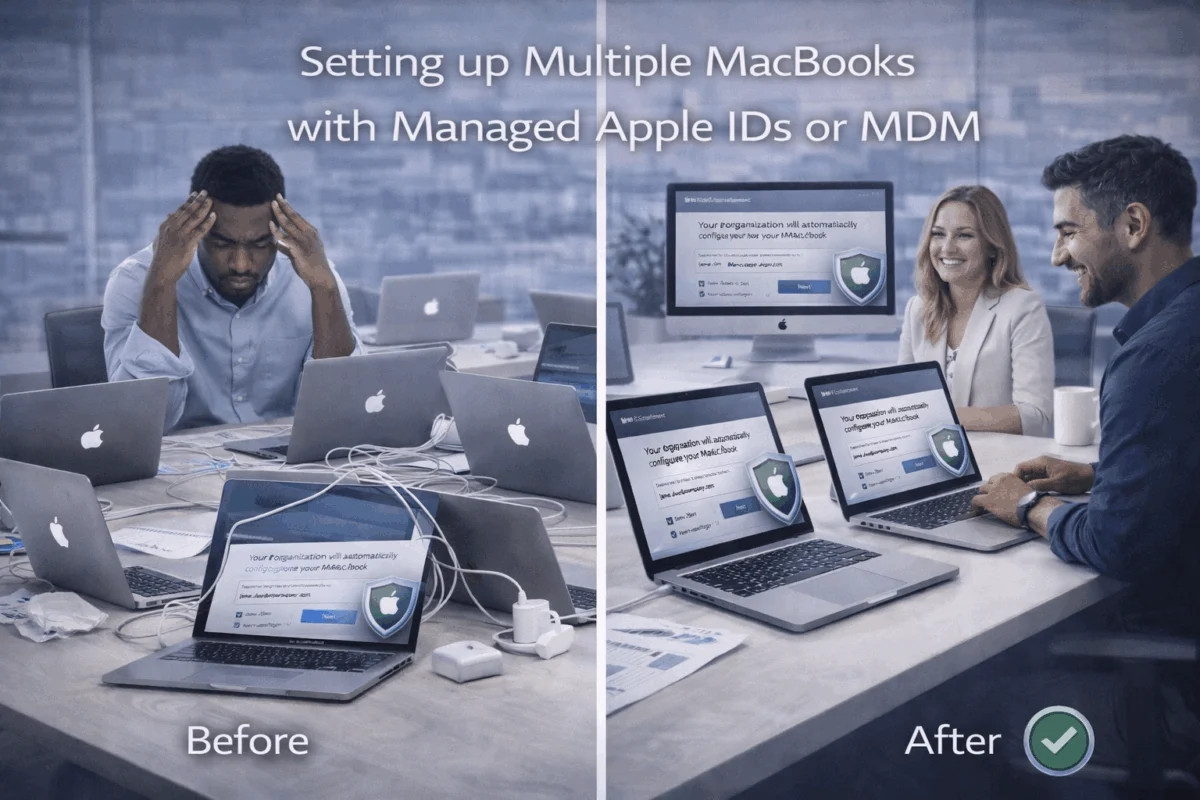
The actual value of setting up multiple MacBooks with managed Apple IDs or MDM becomes apparent through measurable improvements in productivity and support efficiency. Tracking these metrics helps justify the investment and identify areas for continued optimization.
Key Performance Indicators
Successful MDM implementations typically show improvement across several measurable areas within 3-6 months of deployment.
Primary success metrics:
• Reduced support ticket volume by 40-60% for device-related issues
• Faster employee onboarding from days to hours for technology setup
• Improved security compliance with automated policy enforcement
• Decreased software licensing costs through centralized purchasing
• Enhanced productivity measured through user surveys and task completion times
Long-Term Optimization Strategies
Initial deployment represents just the beginning of your MDM journey. Continuous improvement based on real-world usage data and user feedback maximizes long-term value.
Ongoing optimization areas:
- Policy refinement based on security incidents and user feedback
- Application portfolio optimization, removing unused software, and adding productivity tools
- Workflow automation for repetitive administrative tasks
- Integration expansion with other business systems and cloud services
- Capacity planning for future growth and technology refresh cycles
Staying current with Apple’s latest features ensures your MDM implementation continues delivering value as the ecosystem evolves.
Advanced Configuration: Security and Compliance
Beyond basic device management, setting up multiple MacBooks with managed Apple IDs or MDM enables sophisticated security and compliance capabilities that protect your business and client data.
Zero Trust Security Implementation
Modern MDM platforms support zero-trust security models, where every device and user must be verified regardless of network location. This approach provides robust protection for remote and hybrid work environments.
Zero trust components:
• Device health verification before network access
• Continuous compliance monitoring with automatic remediation
• Identity-based access controls tied to managed Apple IDs
• Encrypted communication for all business data transmission
• Behavioral analysis to detect anomalous usage patterns
Regulatory Compliance Automation
Many industries require specific security controls and audit trails. MDM systems can automate compliance reporting and ensure consistent policy enforcement across your MacBook fleet.
Common compliance frameworks supported:
- SOC 2 for service organizations handling customer data
- HIPAA for healthcare-related businesses
- PCI DSS for organizations processing payment cards
- GDPR for businesses serving European customers
- Industry-specific standards like FedRAMP for government contractors
Conclusion
Setting up multiple MacBooks with managed Apple IDs or MDM transforms chaotic device management into a strategic business advantage. The investment in proper planning, implementation, and ongoing optimization pays dividends through reduced support costs, enhanced security, and improved employee productivity.
Success requires balancing technical capabilities with user experience, ensuring that security measures enhance rather than hinder daily workflows. By following the structured approach outlined in this guide—from initial Apple Business Manager setup through advanced security configuration—small businesses and creative agencies can achieve enterprise-level device management without enterprise-level complexity.
The key lies in starting with clear objectives, choosing appropriate tools for your business size, and building sustainable processes that grow with your organization. Proactive technology management prevents the technical debt that often accumulates in rapidly growing businesses.
Next steps for implementation:
- Assess your current device inventory and identify immediate pain points
- Research MDM solutions that align with your business size and technical requirements
- Plan your migration timeline with appropriate testing and training phases
- Engage with experienced consultants if internal expertise is limited
- Start small with a pilot group before full deployment
Remember that successful MDM implementation is a journey, not a destination. The systems and processes you build today will evolve as your business needs and Apple’s ongoing innovation in enterprise device management evolve.
References
[1] Apple Business Manager documentation and best practices
[2] Industry surveys on MDM adoption and ROI metrics
[3] Security compliance framework requirements and implementation guides

Want this Mac Security implemented for you?
MacWorks 360 hardens, monitors, and backs up Mac fleets across New Jersey. We build policies, deploy tools, and prove restores—so your team stays safe and focused.
Contact us · Managed IT for Mac · Apple IT Support.
Based in Springfield, NJ—serving Summit, Millburn, Short Hills, Chatham, Montclair, and beyond.