
Why Do Major Internet Outages Keep Happening?
The morning of July 19, 2024, brought chaos to airports, banks, hospitals, and businesses worldwide when a single software update triggered the most significant IT outage in history. Within hours, millions of devices went offline, flights were grounded, and critical services ground to a halt. For creative professionals and small business owners who depend on seamless connectivity for their Mac-based workflows, this global disruption served as a stark reminder of how fragile our digital infrastructure really is. Understanding why major internet outages keep happening has become essential for anyone running a business in our interconnected world.
Key Takeaways
• Single points of failure in our interconnected digital infrastructure can trigger cascading outages affecting millions of users worldwide
• Aging infrastructure and rapid digital transformation create vulnerabilities that cybercriminals and technical failures can exploit
• Proactive planning with backup systems, redundant connections, and local data storage can protect your business during major outages
• Mac-specific solutions like local backups and device management help creative professionals maintain productivity during network disruptions
• Understanding root causes empowers small business owners to make informed decisions about their technology infrastructure and risk management
The Growing Frequency of Major Internet Outages
Major internet outages have become increasingly common, with significant disruptions occurring multiple times per year rather than once every few years. The 2024 CrowdStrike incident affected over 8.5 million Windows devices globally, but it wasn’t an isolated event [1]. In previous years, major outages affected Facebook/Meta services, Amazon Web Services, and various telecommunications providers, leaving businesses scrambling to maintain operations.
For creative studios and small businesses running Mac fleets, these outages represent more than inconvenience—they threaten project deadlines, client relationships, and revenue streams. When cloud-based design tools, file sharing services, or communication platforms go dark, the impact cascades through entire workflows.
The statistics paint a concerning picture:
- Global internet outages increased by 32% between 2022 and 2024 [2]
- Average outage duration has grown from 2.5 hours to 4.1 hours [3]
- Economic impact of major outages now exceeds $1 billion per incident [4]
The interconnected nature of modern digital services means that when one major provider experiences issues, the ripple effects spread far beyond their direct customers. This reality underscores the importance of understanding the root causes for business continuity planning.
Understanding Why Major Internet Outages Keep Happening: Root Causes
Infrastructure Vulnerabilities and Single Points of Failure
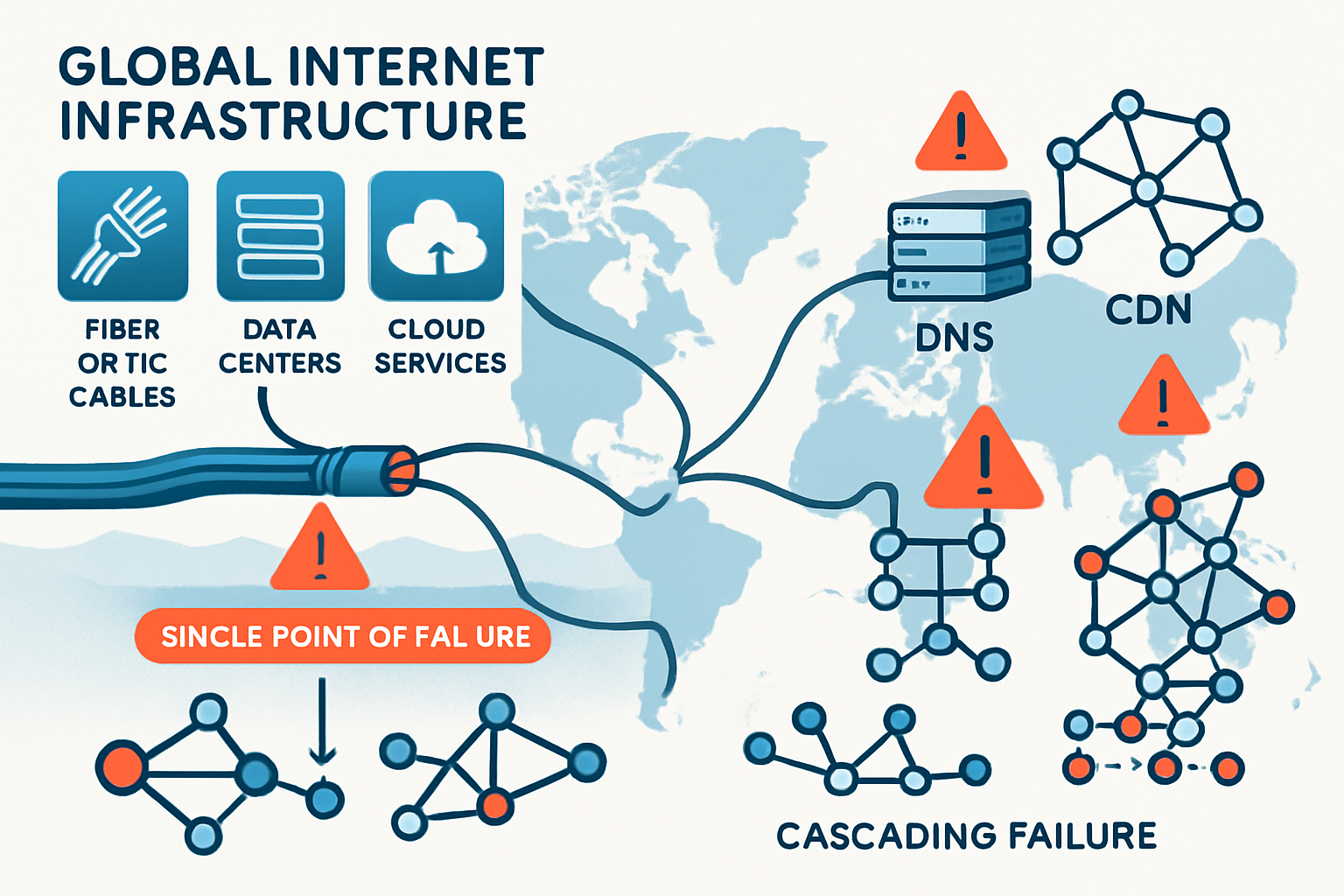
Modern internet infrastructure relies heavily on centralized systems, creating dangerous single points of failure. When major cloud providers, content delivery networks (CDNs), or domain name system (DNS) services experience problems, the effects multiply exponentially across the web.
Critical infrastructure bottlenecks include:
- Undersea fiber optic cables carrying 99% of international internet traffic
- Primary data centers housing critical servers for multiple services
- DNS root servers that translate domain names into IP addresses
- Internet exchange points where different networks connect
The consolidation of internet services among a handful of major providers has amplified these vulnerabilities. When Amazon Web Services experiences an outage, it doesn’t just affect Amazon—it impacts Netflix, Spotify, countless business applications, and the Mac-based creative tools that depend on cloud connectivity.
Human Error and Software Updates Gone Wrong
Human error remains the leading cause of major internet outages, accounting for approximately 70% of significant disruptions [5]. The CrowdStrike incident exemplifies how a single software update pushed to millions of systems can create global chaos.
Common human error scenarios include:
- Misconfigured network settings during routine maintenance
- Inadequate testing of software updates before deployment
- Incorrect DNS changes that redirect traffic improperly
- Accidental deletion of critical configuration files
For businesses managing Mac environments, this highlights the importance of careful update management and testing procedures before deploying changes across entire fleets.
Cybersecurity Threats and Attacks
Sophisticated cyberattacks increasingly target internet infrastructure rather than individual organizations. Distributed Denial of Service (DDoS) attacks have grown in scale and complexity, while nation-state actors target critical infrastructure components.
Emerging cyber threats include:
- Coordinated botnet attacks overwhelmed primary services
- Supply chain compromises affecting software updates
- Infrastructure targeting by advanced persistent threats
- Ransomware attacks on internet service providers
The rise in cyber threats makes robust security practices more critical than ever for protecting business operations during widespread disruptions.
The Cascade Effect: How Small Problems Become Global Disasters
Understanding why major internet outages keep happening requires examining how localized issues escalate into global problems. Modern internet architecture creates interconnected dependencies where failure in one system triggers failures in others.
The Domino Effect in Digital Infrastructure
When a significant service provider experiences an outage, the effects don’t remain contained. Cloud-dependent applications lose functionality, backup systems may rely on the same compromised infrastructure, and alternative services become overwhelmed by sudden traffic spikes.
The cascade typically follows this pattern:
- Initial failure occurs in a critical service or infrastructure component
- Dependent services begin experiencing connectivity issues
- Traffic rerouting overloads alternative pathways
- Backup systems fail due to unexpected load or shared dependencies
- Recovery efforts are hampered by communication and coordination challenges
For Mac users in creative industries, this cascade can be particularly devastating. Design software that relies on cloud licensing, file sync services, and collaborative platforms may all fail simultaneously, leaving teams unable to access their work or communicate with clients.
Geographic and Temporal Amplification
Internet outages often occur during peak usage hours and can affect entire geographic regions due to shared infrastructure. When submarine cables are damaged or major data centers go offline, entire continents may experience degraded connectivity.
The global nature of creative work means that an outage affecting North American data centers can impact collaboration with international clients, disrupt file transfers to overseas production facilities, and prevent access to globally distributed content delivery networks.
Why Do Major Internet Outages Keep Happening: The Business Impact
For small business owners and creative professionals, major internet outages translate directly into lost productivity, missed deadlines, and damaged client relationships. Understanding these impacts helps justify investments in redundancy and backup systems.
Immediate Operational Disruptions
When internet connectivity fails, modern Mac-based workflows grind to a halt. Cloud-based design applications become unusable, file synchronization stops, and team communication platforms go dark. The immediate impact includes:
Creative workflow disruptions:
- Design software licensing failures when cloud verification is unavailable
- File access problems for projects stored in cloud services
- Collaboration breaks down when team communication tools fail
- Client delivery delays due to upload and sharing service outages
Business operation impacts:
- Payment processing interruptions are affecting cash flow
- Customer service degradation when support tools are offline
- Inventory management issues for e-commerce operations
- Remote work complications when VPN and cloud services fail
Long-term Consequences and Recovery Challenges
The effects of major outages extend well beyond the immediate disruption period. Recovery often takes longer than the outage itself, as systems must be synchronized, data integrity verified, and normal operations gradually restored.
Extended recovery challenges include:
- Data synchronization delays as systems come back online
- Version control conflicts from offline work during outages
- Client confidence erosion due to missed deliverables
- Competitive disadvantage against better-prepared competitors
Innovative businesses recognize these risks and implement proactive protection strategies to minimize disruption during major outages.
Building Resilience: Protecting Your Mac-Based Business
Understanding why major internet outages keep happening empowers business owners to take proactive steps to protect their operations. For Mac users and creative professionals, specific strategies can maintain productivity even during widespread connectivity disruptions.
Local Infrastructure and Backup Systems
The key to surviving major internet outages lies in reducing dependence on external connectivity for critical operations. Local infrastructure provides a foundation for continued productivity when cloud services fail.
Essential local infrastructure components:
- Network-attached storage (NAS) for local file access and backup
- Local server capabilities for crucial business applications
- Redundant internet connections from multiple service providers
- Uninterruptible power supplies to maintain operations during power fluctuations
For creative professionals working with large media files, local storage becomes exceptionally crucial. When cloud sync services fail, having recent copies of project files stored locally can mean the difference between meeting a deadline and losing a client.
Mac-Specific Resilience Strategies
Apple’s ecosystem provides unique advantages for building resilient workflows, but these benefits must be properly configured and maintained. A professional Mac setup and optimization can significantly improve resilience during outages.
Mac ecosystem resilience features:
- Time Machine backups provide local file recovery capabilities
- AirDrop and local sharing for team collaboration without internet
- Offline-capable applications that can function without cloud connectivity
- Local device management through Apple Configurator and similar tools
The integration between Mac, iPhone, and iPad devices also provides communication and workflow continuity options when traditional internet services fail. Proper device configuration ensures these backup communication methods work reliably.
Proactive Monitoring and Response Planning
Successful outage management begins long before problems occur. Proactive monitoring systems can provide early warning of developing issues, while response plans ensure teams know how to maintain operations during disruptions.
Monitoring and response elements:
- Network monitoring tools that track connectivity and performance
- Automated failover systems that switch to backup connections
- Communication protocols for coordinating during outages
- Regular testing of backup systems and recovery procedures
“We don’t just fix issues. We prevent them. Our proactive monitoring approach helps clients identify potential problems before they impact productivity, ensuring peace of mind through technology solutions that actually work when you need them most.”
The Role of Managed IT Services in Outage Preparedness

For small businesses and creative studios, building comprehensive outage resilience requires expertise that goes beyond basic IT knowledge. Professional managed services provide the strategic planning and technical implementation needed to maintain operations during major disruptions.
Strategic Infrastructure Planning
Effective outage preparedness begins with understanding your specific vulnerabilities and designing systems that address your unique business needs. This requires analyzing workflows, identifying critical dependencies, and implementing targeted solutions.
Strategic planning components:
- Risk assessment identifying potential single points of failure
- Dependency mapping showing how different systems interact
- Recovery prioritization, determining which systems must be restored first
- Cost-benefit analysis of varying resilience options
Professional IT consultants bring 20+ years of experience in designing resilient systems that balance protection with practical budget constraints. This expertise proves invaluable when major outages test your preparedness.
Implementation and Ongoing Management
Building resilient infrastructure requires more than purchasing equipment—it demands proper configuration, regular testing, and continuous optimization. Customized Mac infrastructure optimization ensures systems work together effectively during normal operations and emergencies.
Implementation best practices:
- Phased deployment minimizing disruption during system upgrades
- Comprehensive testing verifying backup systems work as designed
- Documentation ensuring team members understand emergency procedures
- Regular updates keep security and functionality current
The complexity of modern Mac environments, especially when integrated with cloud services and mobile devices, requires specialized knowledge to implement effectively. Professional management ensures these systems provide reliable protection during major outages.
Future-Proofing Against Evolving Threats
As our understanding of why major internet outages keep happening evolves, so too must our approaches to prevention and mitigation. Emerging technologies and changing threat landscapes require adaptive strategies that can grow to address new challenges.
Emerging Technologies and New Vulnerabilities
The rapid adoption of artificial intelligence, edge computing, and Internet of Things devices creates new potential points of failure in our digital infrastructure. While these technologies offer significant benefits, they also introduce new complexities and vulnerabilities.
Emerging considerations include:
- AI system dependencies that may fail during outages
- Edge computing requirements for local processing capabilities
- IoT device management during connectivity disruptions
- 5G network integration and backup communication options
For creative professionals, these emerging technologies offer new capabilities for content creation and collaboration, but they also require careful integration into resilient infrastructure designs.
Adaptive Security and Resilience Strategies
Future-proofing requires building systems that can adapt to new threats and technologies without requiring a complete redesign. This approach emphasizes flexibility, modularity, and continuous improvement rather than static solutions.
Adaptive strategy elements:
- Modular infrastructure that can incorporate new technologies
- Continuous monitoring and improvement of resilience measures
- Regular training keeps teams current with new threats and solutions
- Vendor diversity reduces dependence on single providers
The goal is to create infrastructure that becomes more resilient over time, learning from each incident and incorporating new protective measures as they become available.
Conclusion
Understanding why major internet outages keep happening reveals a complex web of infrastructure vulnerabilities, human errors, and evolving cyber threats that affect every business dependent on digital connectivity. For small business owners, creative professionals, and Mac users, these outages represent significant risks to productivity, client relationships, and competitive advantage.
The key to protecting your business lies in proactive preparation rather than reactive response. By implementing local backup systems, diversifying internet connections, and maintaining current local copies of critical files, you can keep operations even when primary cloud services fail. Mac-specific resilience strategies, including proper Time Machine configuration, local device management, and offline-capable workflows, provide additional protection tailored to Apple ecosystem users.
However, building truly resilient infrastructure requires expertise that goes beyond basic IT knowledge. Professional managed services deliver the strategic planning, technical implementation, and ongoing optimization needed to create systems that actually work during major outages. With over 20 years of experience in Mac infrastructure optimization, MacWorks 360 helps creative professionals and small businesses build peace of mind through technology solutions designed for real-world reliability.
Take action today to protect your business:
- Assess your current vulnerabilities and single points of failure
- Implement local backup systems for critical files and applications
- Establish redundant internet connections from multiple providers
- Test your emergency procedures regularly to ensure they work
- Partner with experienced professionals who understand Mac-specific resilience strategies
Don’t wait for the next major outage to expose your vulnerabilities. Contact MacWorks 360 today to discuss customized infrastructure solutions that keep your creative workflows running smoothly, regardless of what happens to the broader internet. Our proactive approach to Mac IT support ensures your team stays productive while competitors struggle with connectivity issues.
References
[1] Microsoft. (2024). “CrowdStrike Outage Impact Analysis.” Microsoft Security Response Center.
[2] Internet Society. (2024). “Global Internet Infrastructure Report 2024.”
[3] Downdetector. (2024). “Annual Outage Duration Analysis.”
[4] Lloyds of London. (2024). “Economic Impact of Cyber Outages Report.”
[5] Uptime Institute. (2024). “Data Center Outage Analysis and Prevention Study.”

Want this Mac Email Security implemented for you?
MacWorks 360 hardens, monitors, and backs up Mac fleets across New Jersey. We build policies, deploy tools, and prove restores—so your team stays safe and focused.
Contact us · Managed IT for Mac · Apple IT Support
Based in Springfield, NJ—serving Summit, Millburn, Short Hills, Chatham, Montclair, and beyond.